
A Virtual Heritage Project
The past often survives only in fragments: ruins, scattered artifacts, and archaeological traces. But what if we could bring those fragments together to visualize how an ancient city once looked?
For my Master’s in Virtual Heritage at the University of Alicante, I created a digital reconstruction of the Roman city Colonia Iulia Ilici Augusta at the La Alcudia archaeological site in Elche, Spain.
The project aims to visually reconstruct the city and its landscape as they might have looked in the 1st century BC through archaeological research and 3D technology. Through digital modelling, it becomes possible to explore the urban layout, the agricultural landscape, and the natural environment that once surrounded the city.
Why Ilici?
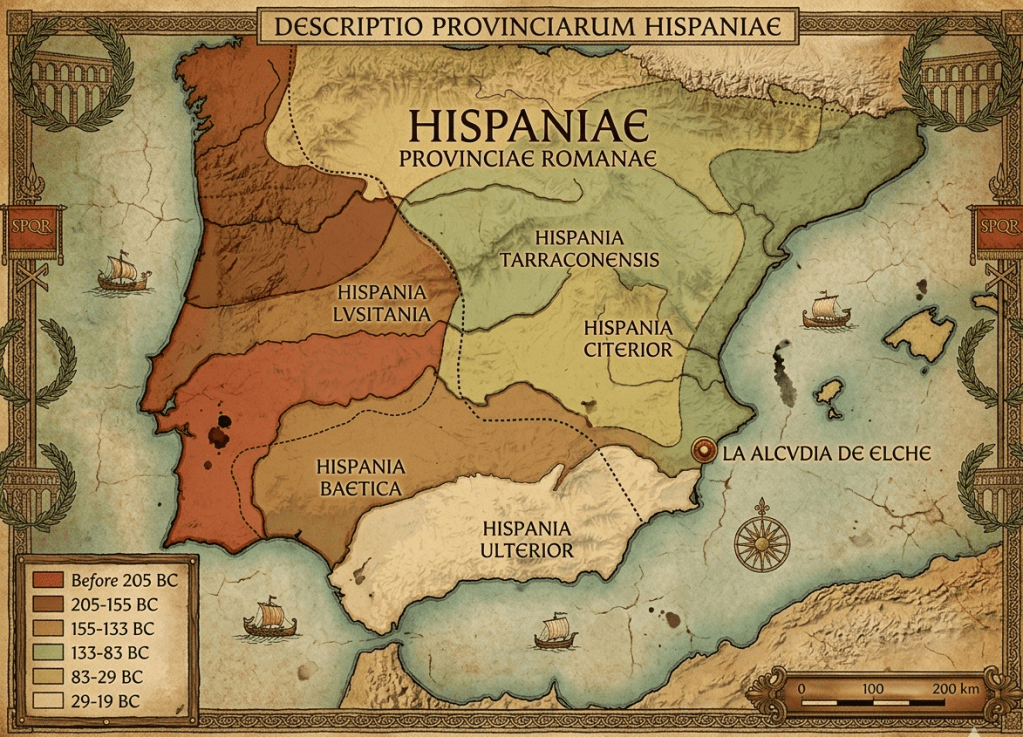
The Roman colony of Ilici was established during Augustus’s reign around 26 BC after the reorganization of Hispania post-civil wars.
It was built over an earlier Iberian settlement and became a key city in the Roman province of Hispania Citerior.
Its strategic location on a small hill offered views of the plains and proximity to the Vinalopó river, providing access to fertile land and trade routes with the Mediterranean. These factors allowed Ilici to develop into a significant settlement with urban infrastructure, agriculture, and maritime trade via the nearby Portus Ilicitanus.

 Work Portfolio