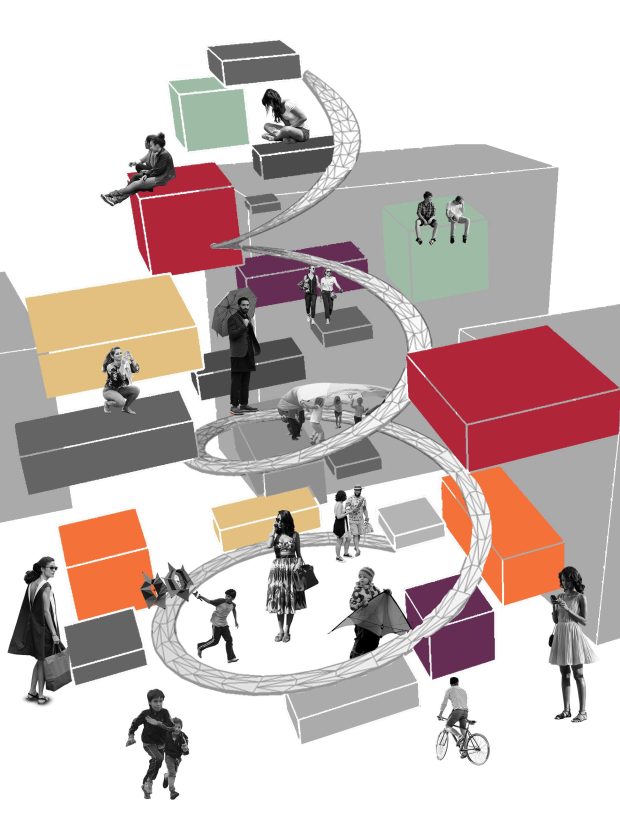
Creation of an urban node within the cluster. Allow for interaction and social networking activities.
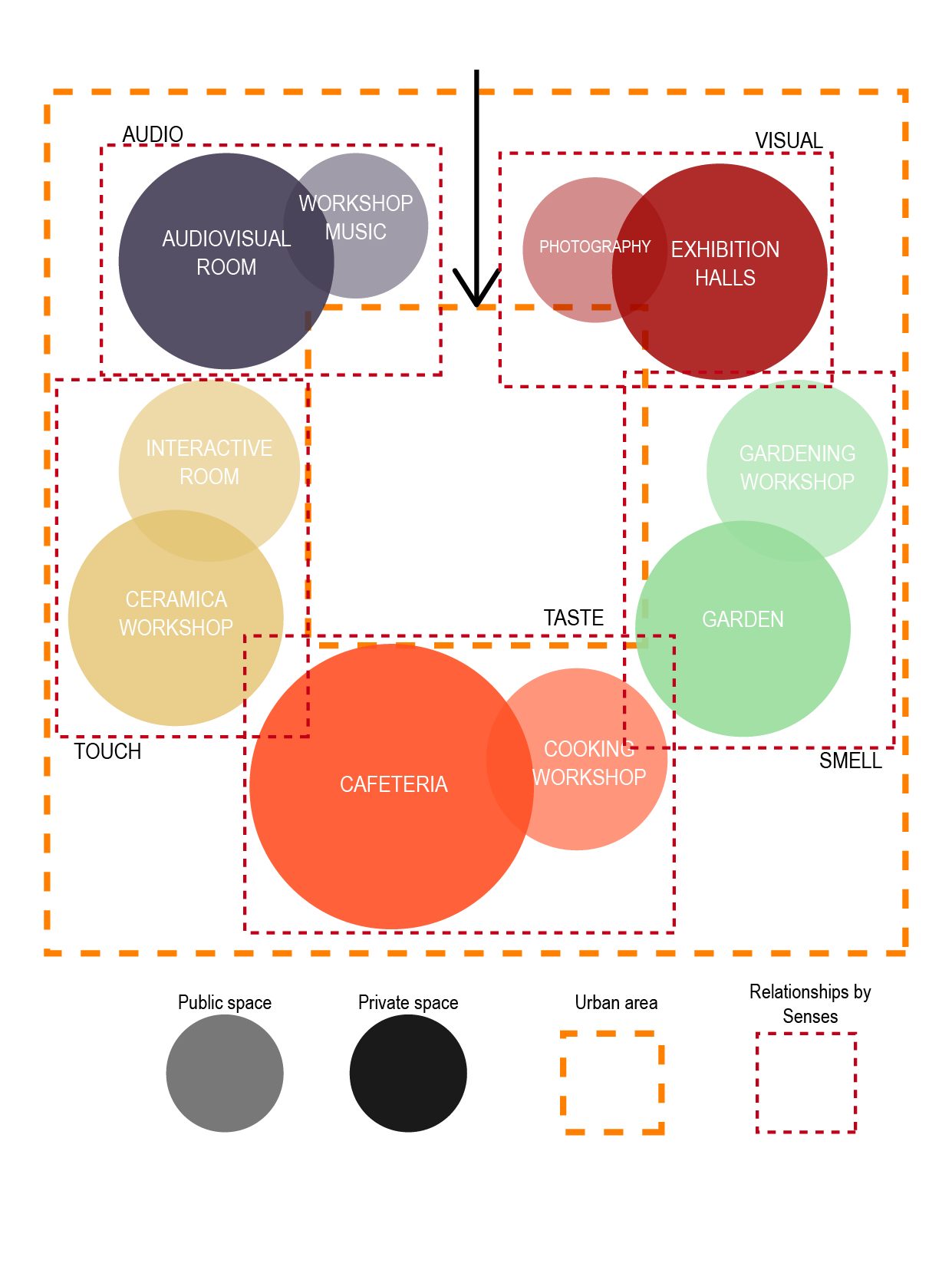
The perception of space occurs through interacting with these mono sensor activities.
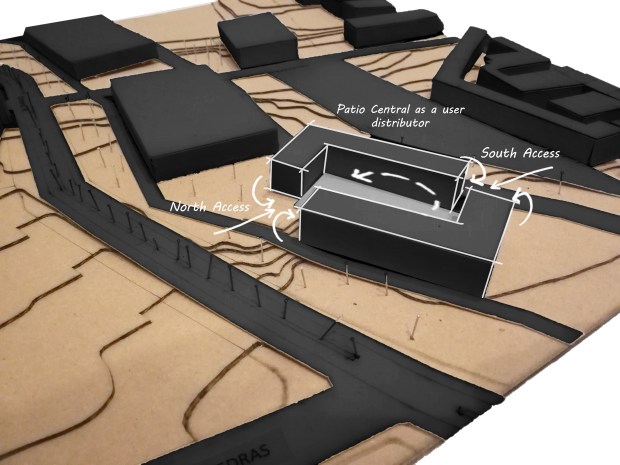
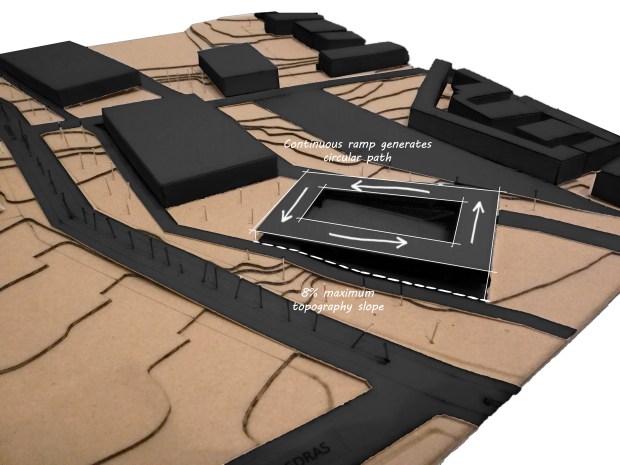
The circulation will form a main element within the spatial organization, a dynamic route between spaces will be generated.
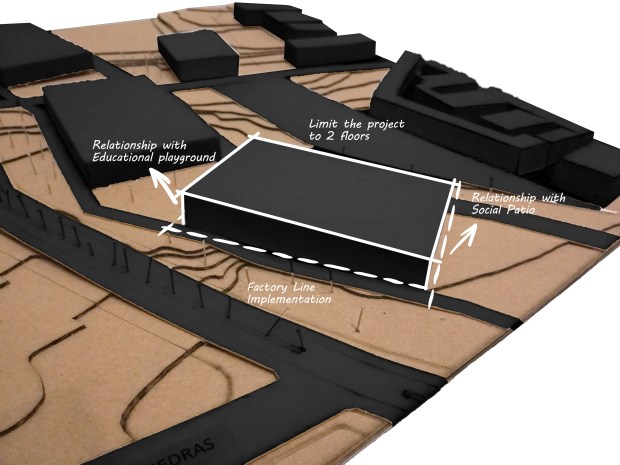
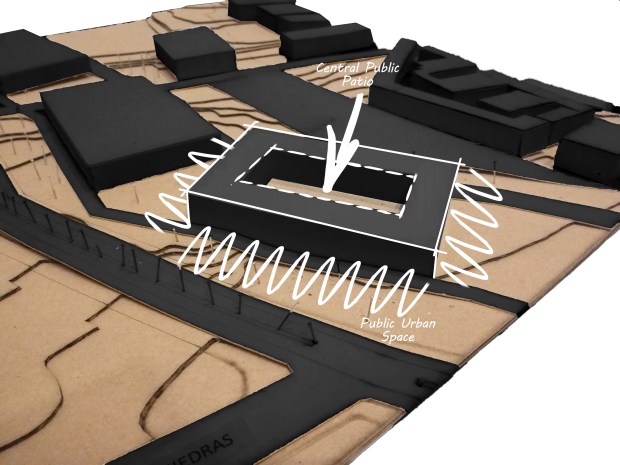
This social interaction will be fostered with the implementation of a central patio with a connection to the interior.
Architectonic Program
Historic Background of Cultural Centers
Contemporary cultural centers originate in the early 20th century, even though they begin to take a more general form in the middle of the same century, where specialized buildings for teaching and dissemination emerge
of knowledge and culture.
The function of a Cultural Center has not been seen altered over the years and remains that of recreation, leisure, and exchange of experiences or culture. What we can observe is the change in shape in which this function is fulfilled, going from squares to spas, theaters, museums, and finally, enhancing the spaces audiences that allow this interaction between elements from space.

Strategies
The Cultural Center elaborated, being a neighborhood facility, arises from sensory experience for which theoretical concepts such as urban node, perception, dynamic routes, and central courtyard are taken. This allows the design of spaces that generate social relationships necessary to enrich cultural exchange within the sector.
Outcome
 Work Portfolio
Leave a comment